

Most people planning a ski trip to Austria start with a price comparison and end up disappointed. The accommodation turns out to be a 25-minute walk from the nearest lift. The lift pass covers only part of the Arlberg. Transfers weren’t included, and adding them on arrival costs more than the flight upgrade they skipped. This guide is written to stop that from happening.
Whether you’re booking Austria ski packages for the first time or returning to the Alps after years away, what follows covers the decisions that actually shape your trip—from timing your arrival correctly to understanding what separates a genuine ski holiday package from a bundle of loosely connected bookings.
Why Booking Early for 2026/27 Already Matters
The 2025/26 season closed on 19 April 2026, and the 2026/27 season is opening in early December—and the gap between seasons is when the smartest bookings happen.
Peak weeks fill fast. Christmas, New Year, and the Austrian and German school holidays in February are not just busy—they are genuinely sold out at quality properties months in advance. Chalet accommodation within walking distance of the lifts disappears first. Guiding slots, particularly for off-piste sessions with certified local guides, follow closely behind.
If you’re flying in from the US, Singapore, or anywhere outside Europe, you have one shot at the week you’ve flown 10 to 14 hours to reach. The lead time to book for high-season weeks in St. Anton is typically 6 to 9 months. For mixed-group arrangements with custom elements such as guiding, equipment, private transfers, and restaurant reservations, that planning horizon starts now.
What a St. Anton Ski Holiday Package Should Actually Include
This is where most packages fail. The headline price looks competitive until you account for what’s missing. Here’s what to verify before committing to any package.
The Arlberg Lift Pass: Full Area vs. Partial
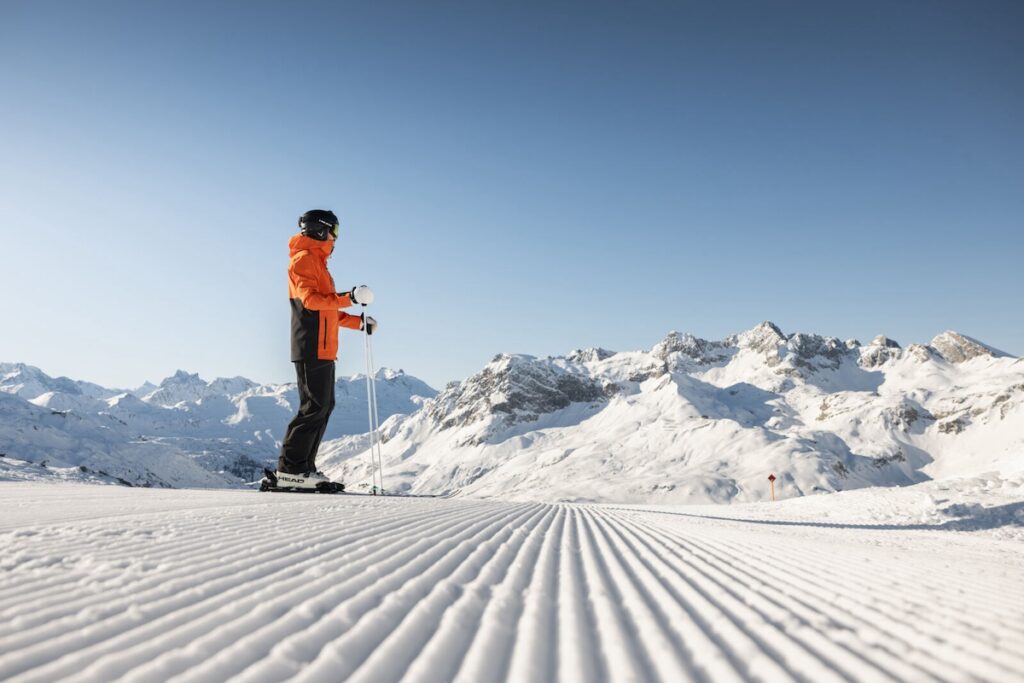
There’s only one lift pass worth holding in St. Anton, and it’s the full Ski Arlberg pass. It covers St. Anton, St. Christoph, Stuben, Lech, Zürs, and Warth-Schröcken—over 305km of marked pistes on a single ticket. Some packages advertise “ski area access” that covers only the St. Anton sectors, cutting you off from Lech and Zürs entirely. That’s a significant reduction in what you’re paying for.
Always confirm the pass covers the complete Arlberg domain. For the 2026/27 season, lift pass pricing typically sits in the range of €77 to €80 per adult per day for a flexible ticket, with multi-day passes offering better value. Factor this into your total cost comparison if a package lists it as optional.
Airport Transfers
St. Anton is approximately one hour by road from Innsbruck airport and 2.5 hours from Zürich. The train from Zürich runs directly into the village—one of St. Anton’s genuine logistical advantages over car-dependent resorts. But private transfers from Innsbruck, particularly for groups with ski equipment, add up quickly if not pre-arranged.
Packages that include transfers from your chosen arrival airport are worth real money. Confirm this is in the package, not listed as an add-on at booking.
Equipment Rental
For travellers flying internationally, bringing ski or snowboard equipment rarely makes financial or logistical sense. Quality rental in St. Anton is excellent. Packages that include pre-booked, fitted equipment rental eliminate the arrival-day queue at the rental shop and let you get on the mountain faster. Bringing your own boots saves time finding the right fit, but leave your skis or snowboard at home, and pre-bookinglets you specify any specific preferences in advance.
Guiding and Technique
For anyone planning to ski off the groomed runs, this is not optional—it’s essential, and not just for safety reasons. A good local guide changes the quality of every day on the mountain. They know where the snow has been preserved after a wind event, which routes are accessible and which are dangerous, and also handle the logistics of reading conditions each morning, so you don’t have to.
The Valluga, St. Anton’s highest and most dramatic terrain at 2,811m, is accessible only with a certified guide. Any package targeting experienced riders that doesn’t offer or organise off-piste guiding in St. Anton is leaving the best part of the mountain out of your trip.
Catering Arrangements
Half board, full board, and self-catered arrangements carry meaningfully different daily budget implications in a resort like St. Anton, where mountain restaurants and village dining are genuinely excellent but priced accordingly. Know what’s included before you arrive, and if self-catered, factor in the cost of dinners in advance rather than on the mountain. Don’t forget about après-ski expenses, as well.
How to Time Your 2026/27 Arrival
The ski season in St. Anton runs from early December through late April. But not all weeks are equal, and timing your arrival correctly is one of the highest-impact decisions in the entire trip. Rather than repeat the full month-by-month breakdown here, the best time to ski in St. Anton covers snow conditions, crowd levels, and pricing differences in detail.
The short version for package planning purposes:
December (early–mid): Lower prices, festive atmosphere, variable lower-mountain conditions. Good for budget-conscious travellers and those who prioritise village atmosphere over full terrain access.
January (mid–late): The strongest value window of the season. Snow is at its most consistent, the Christmas crowd has cleared, and you’re not yet into February peak pricing. For international travellers, mid-January is the single best combination of conditions, availability, and cost.
February: Second peak season. Conditions are typically excellent, but Austrian and German school holidays push both prices and lift queues to their highest points. Not the right week if crowd-free skiing matters to your group.
March (first two weeks): Increasingly popular with experienced skiers, due to the early Easter holiday on 28 March 2027. Longer days, stable snowpack at altitude, and a noticeably more relaxed pace in the village. Quieter than February, with conditions that are often better than early December.
The Accommodation Question: Location Before Everything
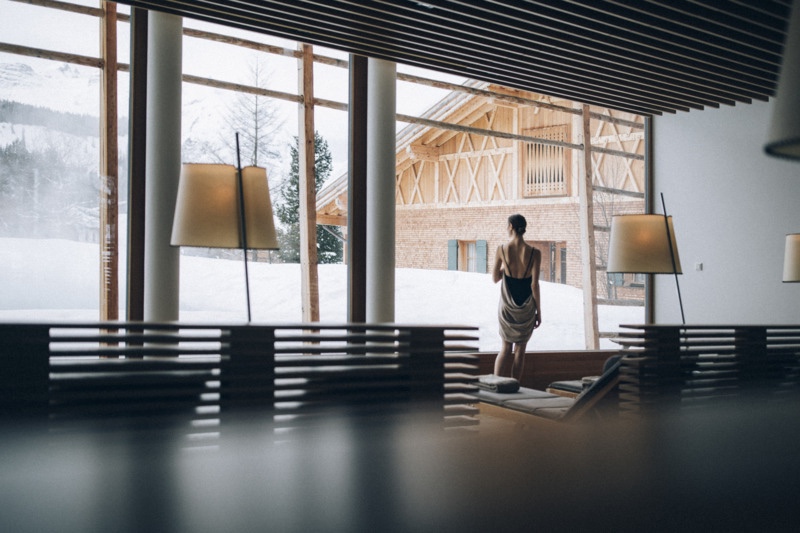
The single most common avoidable mistake in St. Anton package bookings is choosing accommodation that looks good in photos but adds 20 to 30 minutes of commuting (return journey) to every ski day. If you’re still deciding between villages, our guide to the best luxury ski resorts in Austria compares St. Anton, Lech and Zürs side by side.
The village is compact, but the difference between a five-minute walk to the Galzigbahn gondola and a 20-minute one is real. Multiply that across seven mornings and evenings, and it becomes the defining logistical feature of your trip. Properties genuinely within walking distance of the main lift stations- Galzigbahn in the village centre, Nassereinbahn slightly to the east- are worth paying more for. Properties that require a resort bus connection every morning are not ski-in ski-out, regardless of how they’re described.
When evaluating any Austrian ski trip package, ask specifically: what is the walking time to the nearest gondola? Or you can find out the address and use Google Maps to get the exact answer, not in vague descriptions.
Self-Planned vs. Fully Managed: What the Difference Actually Costs You
The argument for managing your own booking is flexibility and the perception of cost control. Both are partially true, but the full cost of self-planning includes significant time investment, the absence of negotiated rates, and the risk of errors that only become apparent when you arrive.
Fully managed packages handled by a locally based specialist typically cost no more than assembling the same components independently—and often cost less, because operators with longstanding supplier relationships in the resort have access to rates unavailable to individual bookers. The real value, though, isn’t the price, but the knowledge embedded in every decision: which accommodation genuinely delivers, which guiding outfit has the right team for your group’s ability level, which restaurants need to be booked weeks in advance.
Working with a ski holiday planner based in St. Anton means you’re not navigating an unfamiliar destination with information assembled from review sites. You have someone with years of direct local experience making the decisions that determine whether your trip is good or exceptional.
Group Packages vs. Private Arrangements: Which Fits Your Group
Group ski packages work well when everyone in the group skis at a similar level and wants a broadly similar experience. They’re straightforward to book and often the most cost-efficient option for homogeneous groups.
Private arrangements are better in almost every other situation. Mixed ability groups, families with non-skiers, couples combining skiing with other activities, or any group where individuals want different things on different days—all of these benefit from a trip built around their specific requirements rather than a fixed group template.
This matters practically in several areas. A family where two members ski advanced terrain, and two are beginners, needs different arrangements from a group of experienced freeride skiers. A couple who want one guiding day, one paragliding experience over the Arlberg, and an evening alpine wine tasting need something that no fixed group package will accommodate—but that a custom arrangement can build easily.
Heliskiing in the broader Arlberg region is another example. It requires advanced coordination with operators who have the right contacts and local knowledge, and cannot be added last-minute through a standard package, plus it won’t appear on any generic booking platform. Groups interested in this need to raise it at the planning stage.
The Days That Aren’t on the Slopes
A well-constructed St. Anton ski holiday package doesn’t assume you’ll ski every single day. Conditions change, riders need recovery, and not everyone in a group wants to ski at the same intensity all week.
St. Anton offers more than most resorts in this regard, offering Ski touring and splitboarding that take you away from the groomed network and into genuinely quiet mountain terrain—a completely different relationship with the same mountain. Snowshoe hiking through the forest trails above the village gives non-skiers access to the alpine environment without requiring any ski equipment. Guided night tobogganing on the 4.5 km run above Gampen is the kind of experience that consistently surprises people who book it as a backup plan and end up calling it a highlight.
The Arlberg WellCom centre offers spa and recovery facilities that serious skiers underestimate until the fourth day of consecutive hard skiing. Building one recovery afternoon into a week’s package isn’t wasted time—it’s what keeps the last two days as good as the first.
Questions to Ask Before You Book Any Package
Before confirming any St. Anton ski holiday package for 2026/27, these are the questions that matter:
Does the lift pass cover the full Ski Arlberg domain?
If not, it covers less than it should.
What is the exact walking time from the accommodation to the nearest gondola?
Minutes, not general descriptions.
Are airport transfers included, and from which airport?
Confirm both Innsbruck and Zurich options if your flights are not yet fixed.
Who is the local contact in St. Anton if something goes wrong?
A local phone number in Austria is worth more than an international customer service line.
What is the cancellation and rebooking policy?
For international travellers, this matters more than the headline price.
Is guiding available, and how far in advance must it be booked?
For any off-piste skiing, this is a day-one question, not an afterthought.
How Alpenature Builds St. Anton Ski Holiday Packages
Alpenature is based in St. Anton am Arlberg, and every package is built around what the group actually wants—not around a fixed template assembled for the average traveller. Accommodation, timing, guiding, activities, and dining are selected based on local knowledge and longstanding relationships in the resort, not availability on a generic booking platform.
For American travellers visiting Austria for the first time, this removes the uncertainty that comes with planning an international trip to an unfamiliar destination. You arrive knowing the week has been arranged by people who know the mountain, not by an algorithm.
When you’re ready to start planning your 2026/27 St. Anton ski holiday, Alpenature is the right place to begin.


