

Before any skier or snowboarder follows an off-piste guide into St. Anton’s famous powder fields, there’s groundwork to cover first. Off-piste skiing in St. Anton sits at the top of what’s possible in alpine skiing—but the terrain surrounding the Arlberg ski resort demands respect, preparation, and honest self-awareness. St. Anton off-piste skiing isn’t difficult to access, which makes proper safety education all the more important. It’s one of the reasons off-piste skiing in Austria has built its reputation not just on powder quality, but on the culture of mountain safety that serious skiers take seriously here.
Why Safety Is a Priority For Off-Piste Adventure
The moment you leave a groomed run, the rules change. There’s no slope patrol, no netting, no regular grooming. What you get instead is variable snow, hidden terrain features, and conditions that shift with wind, temperature, and time of day.
St. Anton off-piste skiing takes you into zones where the snowpack can differ dramatically between north-facing and south-facing aspects—sometimes within a few hundred meters of each other. A slope that looked safe at 9 am can behave differently by midday after the sun has worked on it.
Common risks in ungroomed terrain include avalanche hazard, tree wells, cliffs, and variable snow surfaces that catch skiers off guard. None of these are reasons to stay on the piste—but they are reasons to go in prepared.
Local knowledge is irreplaceable in this environment. A guide who has skied or snowboarded the same ridgeline dozens of times in different conditions knows things no map or app can tell you.
What Alpenature Teaches Before Leaving the Piste
Good off-piste guiding doesn’t start when you drop into the first line. It starts before you even click into your bindings.
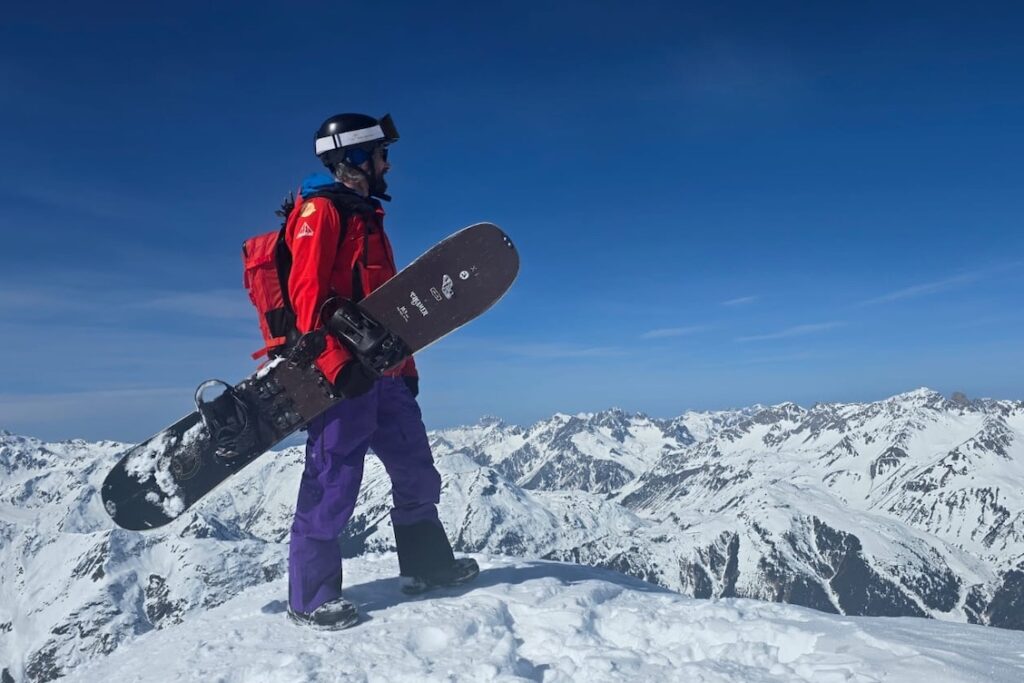
Alpenature runs through equipment checks as a standard part of every off-piste session. Guides confirm that every skier in the group is carrying the right rescue equipment and knows how to use it. This isn’t a formality—it’s part of what makes guided off-piste skiing meaningfully safer than heading out on your own.
Group communication gets established early, too. Who’s going first, where people should position themselves to watch, and what the signals are if something goes wrong. These habits feel simple, but they matter enormously if you ever need them.
Understanding Avalanche Equipment
Every rider entering off-piste terrain in Austria should be carrying three items: a transceiver, a probe, and a shovel. Together, these form the foundation of backcountry skiing safety.
The transceiver (also called a beacon) transmits a signal when you’re skiing and switches to search mode if you need to locate someone buried. Modern transceivers are straightforward to use, but you need to practise the search pattern before you need it in a real situation.
The probe is a collapsible pole that lets you pinpoint exactly where a buried person is once the transceiver has narrowed down the location. Accuracy here saves critical minutes.
The shovel is what gets someone out. A glove and a ski are not substitutes. A proper shovel, used with the right digging technique, is the difference between a rescue and a tragedy.
Knowing what each tool does is the first step. Knowing how to use them under pressure, when your hands are shaking, and adrenaline is high, requires practice.
Reading the Mountain Before the First Turn
Snowpack assessment is something experienced guides do almost unconsciously, but it’s a learned skill built from years of observation. Before choosing a route, a guide will look at recent snowfall totals, wind loading patterns, aspect and elevation, and how the snow has settled over the past few days.
Weather assessment goes beyond the morning forecast. Wind direction matters—it determines where snow has been deposited and where slabs might be forming on lee slopes. Temperature trends over the past 48 hours tell a story about how layers within the snowpack are bonding.
Terrain evaluation is about reading the shape of the mountain. Convex rolls, narrow couloirs, and areas below natural catchment zones all require careful consideration before anyone commits to skiing through them.
Route planning pulls all of this together. A guide doesn’t just pick a line that looks good from the top, but also plans it with escape options, regrouping points, and an awareness of where the group will be exposed and for how long.
Around the Valluga and across the wider Arlberg region, conditions can vary significantly across the same mountain in a single day. This is the alpine environment at its most dynamic, and it rewards those who observe carefully.
Why Guided Off-Piste Skiing Makes a Difference
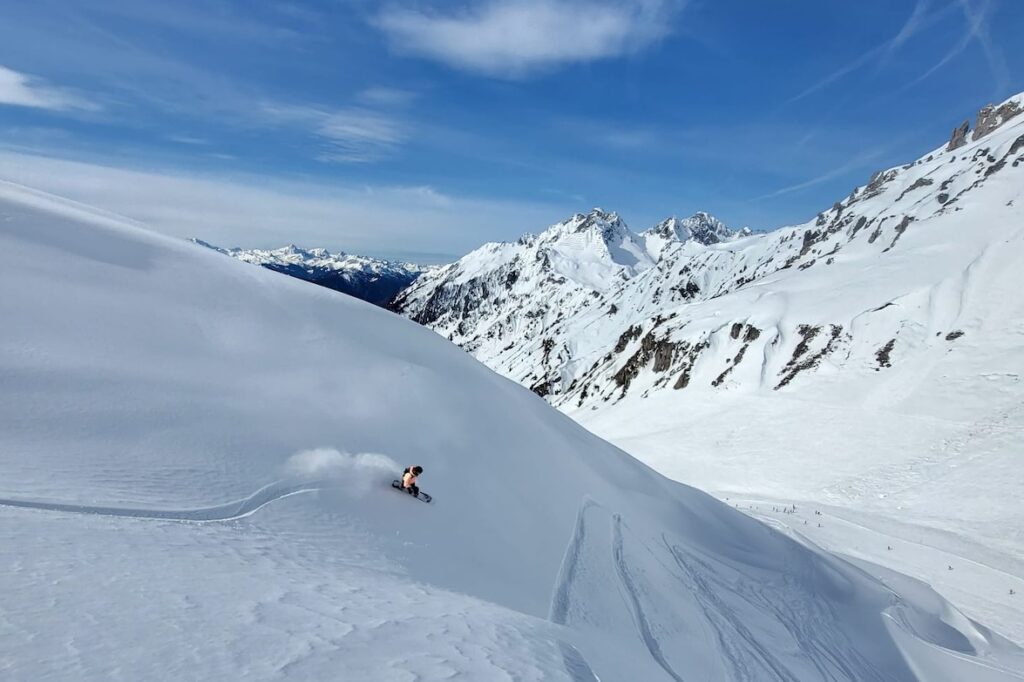
A qualified ski guide in St. Anton brings something no amount of research can replicate: applied local knowledge, built through seasons of watching how specific terrain behaves in specific conditions.
Decision-making in off-piste riding is constant. You’re not just making one choice at the top—you’re reading the situation on every turn, adjusting to what the snow and terrain are telling you. An experienced guide does this while also managing the group, watching for fatigue, and staying ahead of changing conditions.
Safer route selection often means choosing the less obvious line. Not the one that looks most dramatic, but the one that gives the group the best margin. That kind of judgment develops over years, not afternoons.
For riders who are progressing into off-piste terrain, guided days also build confidence in a structured way. You learn what to look for, how to think about risk, and how to make better decisions independently over time. There’s a reason St. Anton is considered perfect for off-piste skiing—the terrain variety allows skiers to develop progressively rather than being thrown into the deep end.
Safety Creates Better Powder Days
There’s a direct relationship between preparation and enjoyment. When you understand the terrain, trust your equipment, and are riding with a guide who’s already done the mountain reading for you, the experience opens up completely.
Skiers who’ve had proper avalanche safety training move through off-piste terrain differently. They’re more relaxed, more observant, and more confident in their decisions. That confidence doesn’t come from ignoring risk—it comes from understanding it.
Responsible off-piste riding means taking the mountain on its own terms. That’s what makes the experience genuinely rewarding rather than just adrenaline-driven.
Bringing It Together
Safety education, guided decision-making, and respect for mountain conditions are what separate a great off-piste day from a dangerous one. The depth and consistency of off-piste riding Austria offers is hard to find anywhere else in the Alps, but accessing it well means going in prepared.
Off-piste guiding exists precisely because that preparation has a steep learning curve. The mountain doesn’t care about your skill level on groomed runs. It responds to knowledge, patience, and experience — the kind that a good guide brings every time.
If you’re planning your first or next off-piste experience in the Arlberg, the St. Anton ski area guide is a solid starting point for understanding the terrain, the zones, and how to make the most of what this mountain offers.


