

Most American skiers think heliskiing means Canada or Alaska, and for good reason. But there’s one place in Europe that offers something the Canadian lodges simply can’t: heliskiing woven into a world-class luxury ski village, with Arlberg guides who have spent their entire careers on these specific mountains.
This is the Arlberg—and if you’re an advanced skier or snowboarder planning your next serious trip, here’s everything you need to know before booking.
Why Austria Is the Only Place in Europe Worth Heliskiing
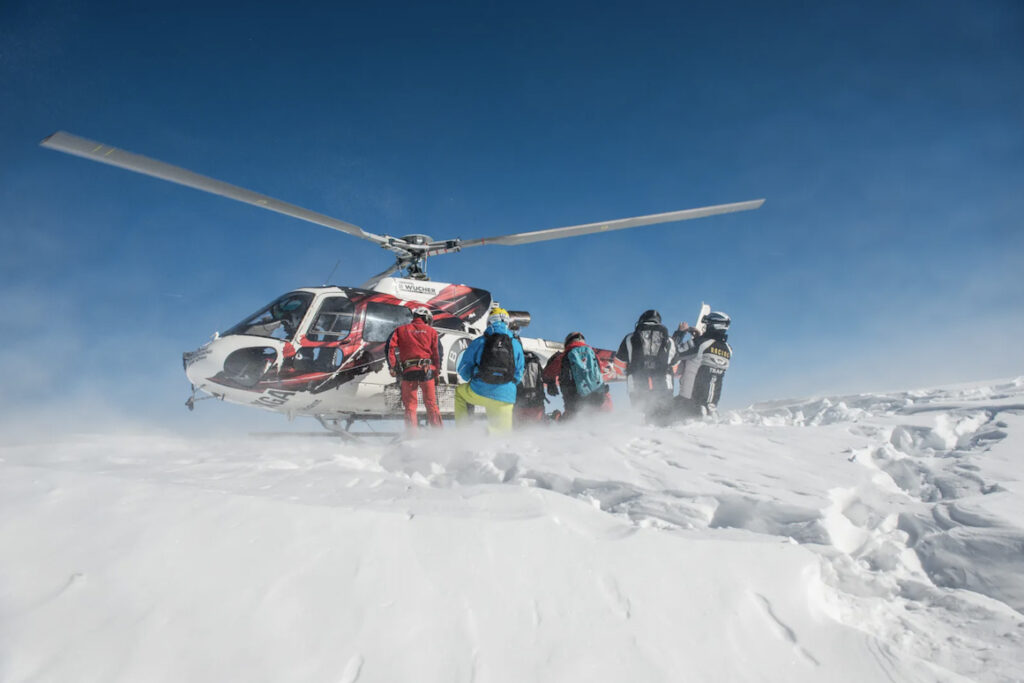
Austria permits heliskiing in exactly one location: the peaks above Lech am Arlberg, operated exclusively by Wucher Helicopter. The two legal summits, the Mehlsack at 2,652m and the Schneetäli at 2,450m, are the only mountains in the country where helicopter landings for skiing are authorized.
That restriction creates something rare: genuine exclusivity without manufactured scarcity.
On a powder morning in the Arlberg, you’re not competing with rotating groups of heli-skiers for fresh tracks. The descent, a 900-metre vertical drop into the quiet Zuger Täli valley, is yours. A small group, a certified mountain guide, and terrain that most skiers in Europe will never touch.
After the run, the Zugerberg lift connects you back into the Lech ski area. That evening, you’re in one of the finest ski villages in the Alps. That’s the Arlberg model, and it’s unlike anything in North America.
For the full destination picture, the complete Arlberg heliskiing guide covers the experience from the ground up, from helicopter logistics to what makes the Arlberg region the crown of Austrian alpine skiing.
What Skill Level Do You Actually Need?
This is the question most people avoid answering honestly. Let’s not.
Heliskiing in Austria requires an advanced to expert off-piste skier. The Mehlsack and Schneetäli descents drop you into genuine high-alpine terrain, ungroomed, unmarked, and variable. You may encounter breakable crust, wind slab, and deep powder sometimes within the same run. Your guide needs to trust that you can handle steep, technical terrain under real mountain conditions.
A practical benchmark for US skiers: if you ski Jackson Hole’s off-piste or regularly take guided backcountry days in Colorado, you’re likely at the right level. If you’re still building confidence on groomed runs, this specific trip isn’t your next step, but it can absolutely be the one after. Alpenature’s guided off-piste skiing in St Anton is the ideal progression, putting you on serious Arlberg terrain with a certified guide before you commit to the heli day.
Snowboarders: You’re welcome, and the terrain suits advanced freeriders well. Some approach traverses require uphill movement in deep snow, so splitboard experience is an asset. Discuss this with your guide before the day.
Fitness: Don’t underestimate it. The 1,100m descent demands continuous, technically engaged skiing, not lift-served cruising. Six to eight weeks of leg training (weighted squats, lateral lunges, interval cardio) before your trip makes a real difference at altitude.
Planning Your Trip from the United States
Getting there: Fly transatlantic into Zürich (ZRH)—direct flights available from New York, Chicago, Atlanta, and LA on Swiss, United, and Delta. From Zürich, a 2.5-hour scenic train takes you directly to St. Anton am Arlberg, or Alpenature can arrange a private transfer continuing to Lech. Innsbruck (INN) is the alternative via Munich or Frankfurt, with a 90-minute road transfer to St. Anton.
Trip length: Plan for a minimum of 5 to 7 nights. Heliskiing is weather-dependent; a viable window needs stable high pressure, low wind at altitude, and clear visibility. Only available during the week and not on weekends, you can realistically count on 1 to 3 good heli days. A shorter trip is a gamble.
When to go: The powder sweet spot is mid-January through mid-February, where the snowpack is most stable, temperatures keep snow dry, and you’re clear of the European school holiday crush that hits in late February. For a detailed month-by-month breakdown of snow, crowds, and pricing, the best time to ski in St Anton guide is the most honest resource for long-haul travelers planning around conditions.
Book early: Premium accommodation in Lech fills 4 to 6 months in advance for January. For Americans planning a winter 2027 trip, now is the time.
What a Heliskiing Day in the Arlberg Looks Like
7:30 am — Guide briefing. Your certified mountain guide meets your group (up to 3 people plus your guide to fit in a helicopter). You’ll cover the day’s snowpack, avalanche assessment, planned descent route, and weather window. Avalanche transceivers are tested and verified. This briefing is technical; take it seriously.
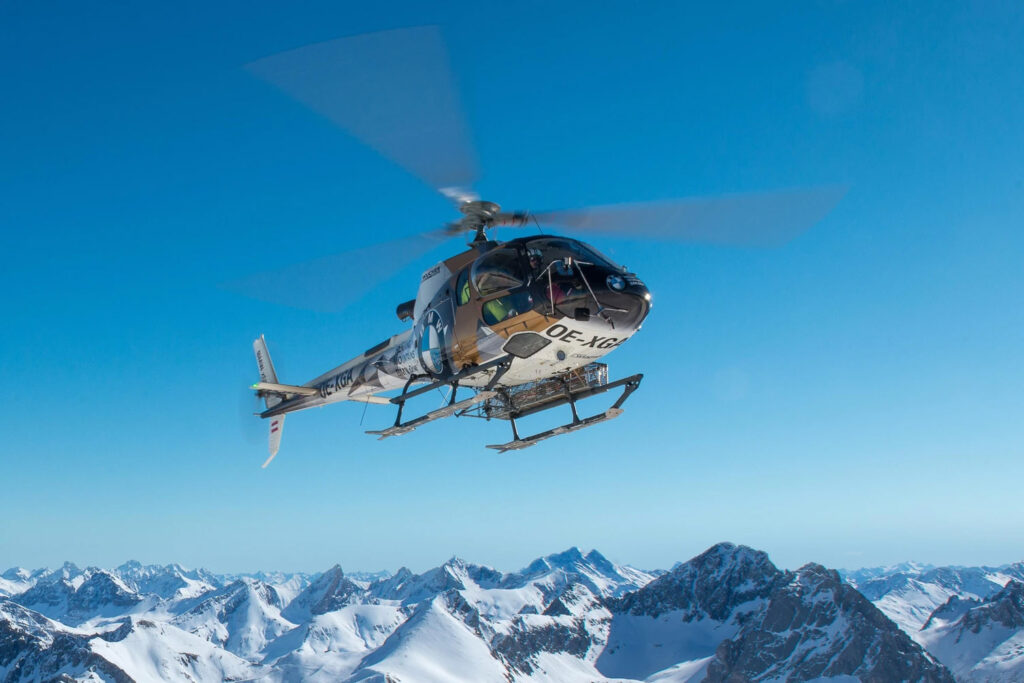
9:00 am — Helicopter flight. Wucher flights depart from Flexenpass above Zürs, or from the Kriegerhorn station (lift pass required). The flight is 8 to 10 minutes of gaining 800 metres of altitude over dramatic Arlberg terrain.
At the summit — The descent:
- Rotors cut, and the mountain goes completely quiet
- Your guide reads the line and drops first; you follow one at a time
- 900 metres of untracked alpine terrain opens up beneath you
- Upper faces are steep and wide; this is where the run earns its reputation
- Terrain narrows lower down into the Zuger Täli valley
- Total descent time: 30 to 45 minutes, depending on conditions and pace
Afternoon. Lunch in Zug bei Lech, then the guide assesses conditions for afternoon runs in the Lech or Zürs backcountry. Many groups continue into a half-day of guided off-piste skiing before returning to the village.
Essential Gear and Preparation
Avalanche safety kit — mandatory. Transceiver, probe, and shovel. Your guide will check your beacon function at the briefing. If you’ve never taken an avalanche safety course, complete one before arriving. The American Avalanche Association runs Level 1 courses across the US throughout winter. Equipment rental is available in St. Anton and Lech if you don’t own a kit.
Outerwear. Fully waterproof shell (Gore-Tex Pro or equivalent, not water-resistant). The Arlberg weather moves fast. Merino base layer, warm packable mid-layer, helmet, and high-contrast goggles.
Skis or snowboard. Wide freeride skis, 100mm+ underfoot. Narrow all-mountain skis will work in hero snow but will limit you in variable conditions. Demo freeride rentals are available in both villages.
Insurance. Standard travel insurance routinely excludes helicopter evacuation and mountain rescue. A ski-specific policy covering alpine rescue is essential, not optional. Verify your coverage before leaving the US.
Why Expert Planning Changes Everything
The logistics of a heliskiing trip in the Arlberg are genuinely complex from the US: coordinating guide bookings, Wucher flight scheduling, accommodation in a high-demand village like Lech, and managing weather-dependent schedule changes across time zones.
Alpenature’s ski holiday planning service handles all of it—airport transfers from Zürich or Innsbruck, curated accommodation, guide coordination, and real-time adjustments when the forecast shifts. For American travelers, having a specialist on the ground in St. Anton who can move your heliski day when a better window opens mid-week is the difference between a trip that works and one that doesn’t.
Start Planning Your Austrian Alps Adventure
The Arlberg offers something genuinely different from the North American model. One descent, one guide, one mountain with no one else on it. Then dinner in Lech.
Contact Alpenature to start building your 2027 heliskiing trip. The best January windows and Lech accommodation fill months in advance; the sooner you plan, the better the trip.


