

There’s a moment every powder day when you push off the top of a slope nobody’s touched yet, and the only sound is your own skis. That first turn is why so many of us get hooked on off-piste skiing in St. Anton and terrain like it. It’s addictive, and honestly, it should be.
But untouched snow doesn’t come with a safety net. Avalanche safety for skiers is something you need to actually understand, not just nod along to, before you head past the ropes. Get it wrong and a great day turns into a very bad one, fast.
I’m going to walk you through what matters: how avalanches actually happen, what gear you need, how to read a forecast, and what to do if things go sideways.
What Is Avalanche Safety and Why Does It Matter?
At its core, avalanche safety is just knowing three things well: how avalanches form, how to read the terrain and snow you’re standing on, and what to do if something goes wrong. That’s it. No magic, just knowledge and practice.
This isn’t only for the hardcore backcountry crowd, either. Plenty of skiers who’d never call themselves “extreme” ski off-piste every season. If that’s you, this applies to you too.
Here’s something worth knowing: most avalanche accidents aren’t freak events. They follow patterns. Once you know what to look for, you start noticing warning signs long before you’re standing on top of one.
Why Off-Piste Skiing Carries More Risk
Groomed runs get checked, bombed, and maintained by resort teams every morning. Step off-piste and none of that applies anymore. You’re on your own to read the mountain, which is exactly what makes off-piste skiing safety such a different game.
A handful of things push the risk up:
- Snowpack – Snow builds up in layers, and those layers don’t always bond well to each other. Wind, sun, and temperature swings can leave a weak snow layer buried under fresh snowfall, and that layer can give way without much warning, triggering a slab avalanche.
- Weather conditions – A big dump of snow, a sudden warm spell, or strong wind can all destabilize a slope in a matter of hours.
- Slope angle – Most avalanches release on slopes between roughly 30 and 45 degrees. Flatter or steeper terrain tends to be less likely to slide, though nothing is ever completely safe.
- Terrain traps – Gullies, cliff bands, and tree wells can turn a small slide into something much more serious. Even a modest avalanche gets dangerous fast if it funnels you into one of these spots.
None of this is meant to scare you off the good stuff. It’s meant to get you actually looking at the terrain in front of you, not just skiing through it.
Essential Avalanche Safety Equipment Every Skier Needs
Think of avalanche safety equipment the way you think of a seatbelt. You hope you never need it. You bring it anyway, every single time.
Here’s what should be in your pack whenever you’re heading off-piste:
- Avalanche transceiver (beacon) – Worn on your body, it sends and picks up a signal, which is how your group finds you if you get buried, and how you’d find them.
- Probe – A collapsible pole for pinpointing exactly where someone’s buried once the beacon has narrowed the search area.
- Shovel – Digging by hand is far too slow. A shovel is what turns a beacon signal into an actual rescue.
- Avalanche airbag – Packed into a backpack, it inflates in seconds and helps keep you closer to the surface if you’re caught in a slide.
- Helmet – Protects against impact from trees, rocks, or debris while you’re moving.
- First aid kit – For the ordinary injuries that happen long before or after any avalanche conversation even starts.
Owning the gear is step one. Knowing how to use it under pressure is the part people skip. Run a beacon search drill before the season starts, not for the first time when it actually matters.
How to Check Avalanche Conditions Before You Ski
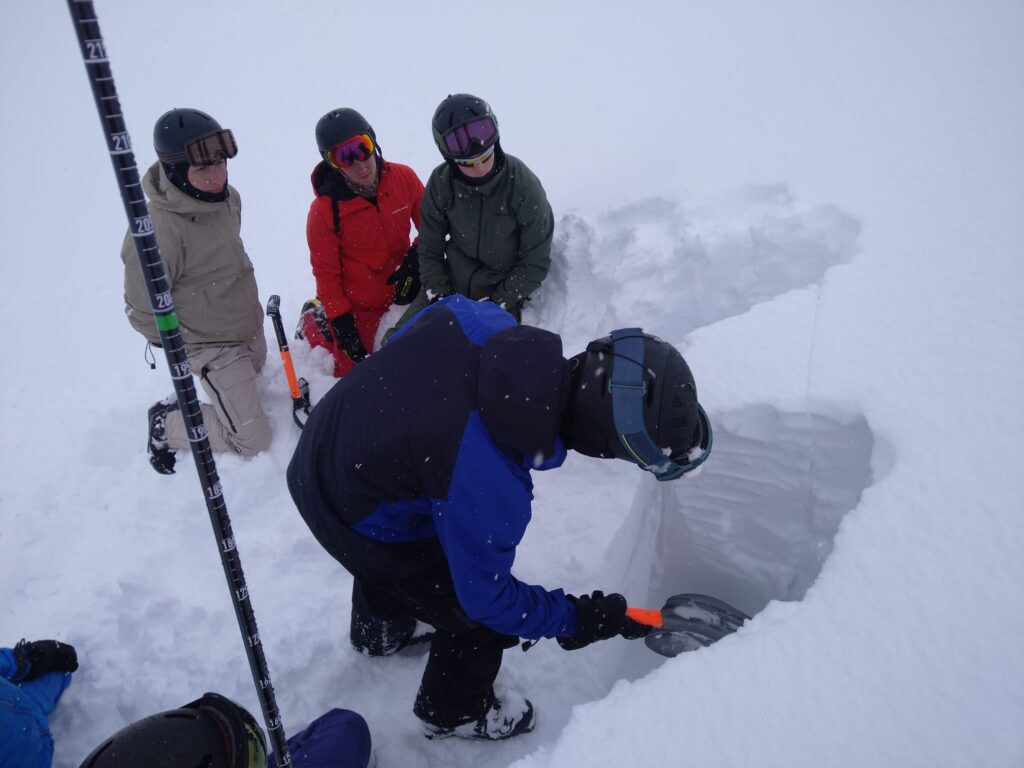
Before you touch a single untracked line, check the avalanche forecast for that exact area. Conditions can shift dramatically between two valleys that are only a few kilometers apart, so a general regional outlook isn’t enough on its own.
A few things worth checking every morning:
- The avalanche bulletin, which rates the day’s danger on the European Avalanche Danger Scale, runs from 1 (low) to 5 (very high).
- The weather forecast, especially recent snowfall, wind direction, and any temperature swings.
- Local conditions from guides or resort staff who’ve genuinely been out on the slopes that morning, since nothing beats eyes on the snow.
If the avalanche warning sits at level 3 or above, that’s a real signal to rethink your plans, not just a note to “be a bit more careful.” Numbers on an app never replace judgment on the mountain, but they’re the right place to start your day. For anyone weighing terrain choices around St. Anton specifically, our St. Anton ski area guide is a useful companion to the daily bulletin.
10 Avalanche Safety Tips Every Skier Should Follow
None of these are complicated. They’re just habits that experienced backcountry skiers build over years of getting it right, and occasionally getting it wrong.
- Never ski alone. A partner can call for help or start a rescue if something goes wrong.
- Hire a certified ski, snowboard or mountain guide. They read snowpack and terrain daily, and they know which slopes to leave alone.
- Check the forecast every morning, not just once before your trip.
- Carry full rescue gear on every off-piste run, even the short, familiar ones.
- Practise using your equipment before the season starts, not during an actual emergency.
- Avoid risky terrain right after fresh snowfall or a sudden warm-up.
- Watch the slope angle, and steer clear of steep, loaded slopes when danger ratings climb.
- Cross suspect slopes one at a time, so only one person is ever exposed at once.
- Know when to turn back. No run is worth ignoring a bad gut feeling.
- Take an avalanche safety course. Gear alone doesn’t teach you judgment.
Run through this avalanche safety checklist enough times, and it stops feeling like a chore. It just becomes how you ski.
What to Do If an Avalanche Happens
If you get caught in a slide, try to ski or move sideways out of the moving snow right away. Ditch your poles too. They can catch and drag you under.
If you feel yourself going under, use swimming motions to try to stay near the surface. As the snow starts to settle, get your hands up in front of your face to carve out a small air pocket.
If you’re watching from outside, don’t wait around. Mark exactly where the person was last seen, switch your beacon to search mode, and start an organized search with your group straight away. Every second genuinely counts here, since most successful rescues happen within the first 15 to 20 minutes.
This is exactly why beacon practice and a probe and shovel you actually know how to use aren’t optional extras. In an emergency rescue, gear that you can use quickly is the only gear that helps.
Final Thoughts
Off-piste skiing gives you some of the best days you’ll ever have on snow. But avalanche safety for skiers has to come first, every single time, no shortcuts.
Check the forecast. Carry the right gear. Read the terrain honestly. And when conditions look off, be willing to save that run for another day.
If you’d rather have that local knowledge built in from the start, skiing with a certified guide who already knows the snowpack, the terrain, and the day’s bulletin takes a lot of the guesswork out of it. That’s really the whole point of good guiding: more good days, fewer risky calls made on your own. If you’re still in the early stages of planning a ski holiday in Austria, that’s a solid place to start.
FAQ
What causes avalanches?
A combination of a weak snow layer, added weight (from new snowfall or a skier), and a slope steep enough for gravity to trigger a slide.
Is off-piste skiing dangerous?
It carries more risk than groomed runs because the terrain isn’t controlled, but with the right training, gear, and guide, the risk becomes manageable.
What equipment do I need?
A transceiver, probe, shovel, and ideally an avalanche airbag, along with a helmet and first aid kit.
What is an avalanche transceiver?
A device worn on your body that sends and receives signals, allowing rescuers to locate a buried skier quickly.
Should beginners ski off-piste?
Beginners can, but only with a certified mountain guide and proper safety training. It’s not a place to learn terrain judgment on your own.
How do I check avalanche danger?
Check the daily avalanche bulletin for your region, rated on the European Avalanche Danger Scale, alongside the weather forecast and local reports.


