

The lift doors open at 2,328 metres and the first thing you notice is no engines, no chatter, but just the wind moving over the ridge and the sound of fabric being pulled tight behind you.
That’s usually the moment it becomes real.
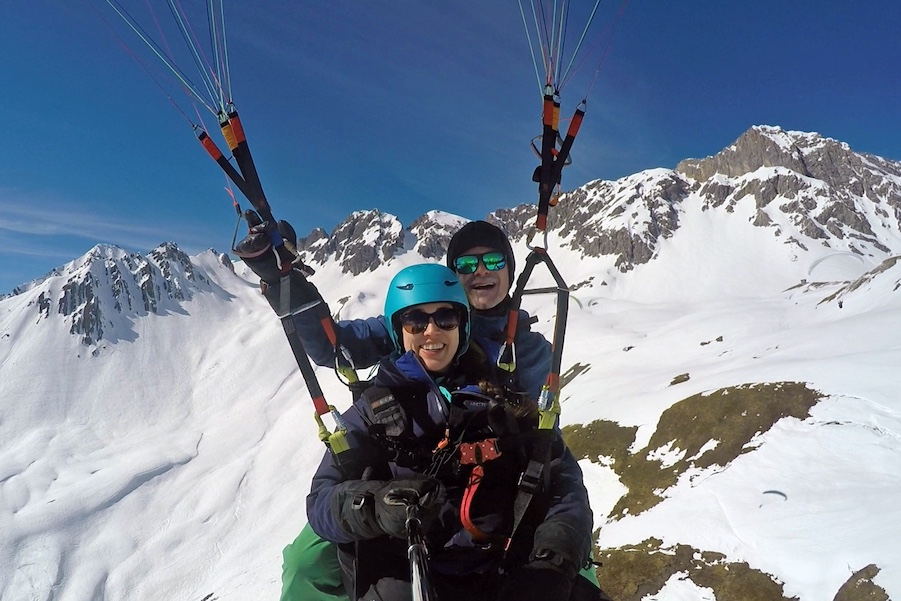
Paragliding in St. Anton looks intimidating from the valley but feels surprisingly calm once you leave the ground. No jump. No freefall. You take a few running steps down a slope, the wing lifts, and the mountain drops away beneath your boots.
What paragliding in St. Anton actually involves
A tandem paragliding experience here starts like this: you meet your pilot, ride the lifts to Kapall, and walk a short way to the launch slope. The briefing is short and genuinely simple: stay standing, run or ski when told, don’t sit down until the pilot says so.
Then you’re flying.
Airtime is around 15 minutes, where you cross above the village, look across at the Valluga, and land at the Nasserein golf course. Door to door, plan on one to two hours.
Your pilot handles the wing, the brakes, and the landing approach. Ask mid-flight, and most will hand you the controls for a minute and teach you how to steer
Why the Arlberg beats most Alpine launch sites
Plenty of places offer a tandem flight, but very few give you this view.
You launch above the treeline, Verwall on one side, the Arlberg massif wrapping around the other. The village sits directly below, so you’re not drifting over empty forest—you’re watching people move between hotels and lifts.
Locals will tell you the terrain is the real draw. St. Anton has proper vertical, which means longer glides and cleaner air than the gentler valleys east of here—the difference between a true Alpine paragliding experience and a short hop down a grassy hill.
Of all the things to do in St. Anton, this is the one that ends up on your Instagram’s highlight reel.
Is paragliding in St. Anton safe?
Yes, with a licensed operator—and that qualification matters.
Tandem pilots in Austria work under a state licensing system, logging hours and running equipment on a fixed inspection schedule. Reserve parachutes are standard, and flight insurance is included in most St. Anton paragliding bookings, including ours.
The bigger safety factor isn’t the gear. It’s the weather.
Good pilots cancel, often. Anyone willing to fly you in marginal conditions to protect a booking isn’t the pilot you want, so a postponed flight is a good sign.
How pilots read the conditions
Morning air is smooth, which is why many flights go out early. By midday, sun on the south-facing slopes builds thermals—rising columns of warm air that make the flight livelier and, for some, slightly bumpy.
Pilots also watch for föhn, a warm wind that pours over the Alps and turns launch sites unpredictable. On föhn days, nobody flies. Cloud matters too; if it sits below the launch, the flight doesn’t happen.
Best time for paragliding in St. Anton
Flights run year-round, and the two seasons are genuinely different experiences.
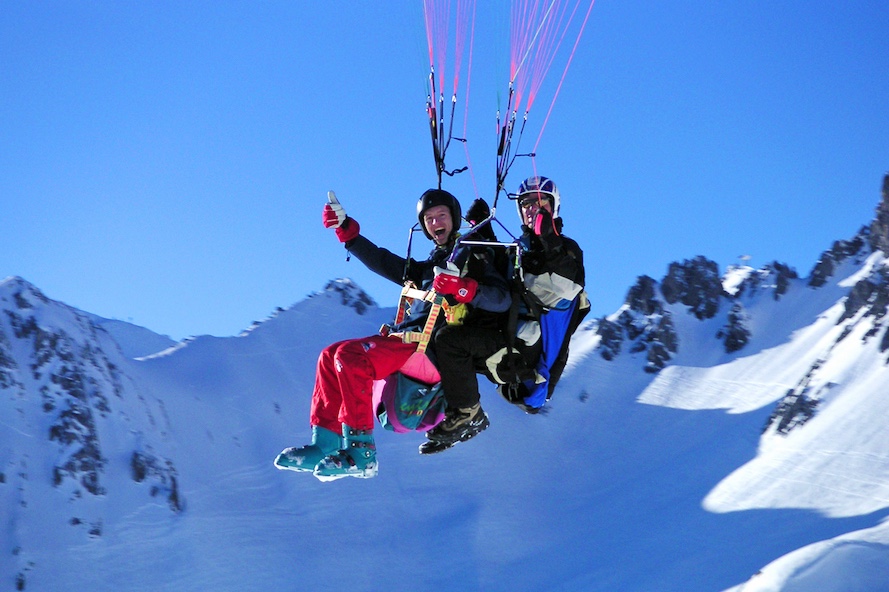
Winter (December–April). Everything below is white. The contrast between snow, rock, and rooftops is why winter paragliding in Austria photographs so well, and the air tends to be smoother.
Summer (June–September). Green valleys and thermals are strong enough to keep you up longer. Summer paragliding in St. Anton suits anyone who wants a livelier flight rather than a gentle glide down.
For timing the wider trip, our breakdown of the best time to visit St. Anton covers snow, crowds and pricing month by month.
Quick facts
| Detail | What to expect |
| Launch point | Top of Kapall, 2,328 m |
| Landing | Nasserein golf course |
| Time in the air | Around 15 minutes |
| Total time needed | 1–2 hours |
| Typical price | From around €200 per person |
| Lift pass | Not included |
| Weight range | Roughly 30–130 kg |
| Experience needed | None |
Prices shift by season and operator, so confirm when booking.
What should I wear for paragliding in Austria?
It’s simpler than people expect. You dress for the mountain, not for flying.
- Shoes: hiking or ski boots and skis. No sandals or smooth-soled trainers—you need grip for the launch.
- Layers: it’s colder at altitude and colder again in the air. One layer more than you think.
- Gloves and sunglasses: both, every season.
- Nothing loose: hats, scarves and lanyards become projectiles. Zip your pockets.
Helmet and harness come from the operator, unless you prefer to wear your own ski helmet
Can beginners go paragliding in St. Anton?
That’s exactly who tandem flying is built for. Children as young as five or six fly with parents nearby, and there’s no upper age limit if you are fit and ready for an adventure in the air.
The only real requirement is jogging five metres downhill without hesitating for those wearing shoes, and sliding forward for those on skis. Hesitation is what makes launches awkward.
Of all the adventure activities in St. Anton, this one asks the least of you physically, which is why it fits so easily into most ski vacations in Austria.
What first-time flyers usually feel
Nerves before. Adrenaline during the flight
The launch is the intense part—six seconds of running or sliding on skis, and lift. After that, most people go quiet. Not scared quiet. Absorbed. There’s no falling sensation because you’re gliding, not dropping, and the harness sits under you like a chair.
The usual reaction on landing isn’t “that was terrifying.” It’s “that was shorter than I expected.”
One honest note: if winding roads bother you, ask for a calm morning slot and skip the spirals.
Flying with Alpenature
We run paragliding in St. Anton from Kapall with certified local pilots who fly this valley year-round and know exactly which mornings work.
Flight insurance is included, lift passes aren’t, and bookings are fully refundable up to seven days ahead. If the weather turns, we offer another date rather than push you into a poor flight.
Our team builds the rest of the day around it too, so your flight, guiding and transfers don’t compete for the same afternoon.
FAQs
How much does paragliding in St. Anton cost?
Expect from around €200 per person across the Arlberg. Photos and video are sometimes bundled in, and lift tickets are usually separate.
How long does the flight last?
Roughly 15 minutes in the air; one to two hours total including the lift ride, briefing and landing.
Do I need to book in advance?
Yes, especially in peak winter weeks. Rescheduling around weather is far easier with notice, which is why we handle it through our ski travel planner service.
Can I take my phone or camera?
Only if it’s securely attached. Loose items are a real hazard on launch, so most pilots mount a camera themselves.
What happens if the weather cancels my flight?
You’re offered another date. With Alpenature, cancellations made at least seven days ahead are fully refundable.
Ready to see the Arlberg from above?
Paragliding in St. Anton buys you fifteen minutes most visitors never get: flying over the Austrian Alps in silence, the runs you skied that morning reduced to thin white lines.
Planning a bigger Arlberg adventure? Our guide to a luxury ski holiday in Austria shows how the pieces fit.
Otherwise, talk to the Alpenature team. Tell us when you’re here, and we’ll find you a good morning to fly.


