

Most snowboarding guides to Austria mention the Arlberg in a single paragraph, sandwiched between Kitzbühel and Sölden. That does the region no justice.
With over 200 kilometres of marked freeride routes, a dedicated snow park built for progression, and backcountry access that rivals anything in the Alps, snowboarding in the Arlberg deserves its own deep dive. Whether you ride park, chase powder, or skin uphill on a splitboard, this is the terrain guide you have been looking for.
The Arlberg region connects 5 villages across Tyrol and Vorarlberg, with St. Anton sitting at its heart. One lift pass covers the entire 300-kilometre network, and the area averages nine metres of natural snowfall each season.
For riders who want more than groomed runs, there is no better base in Austria. This guide covers every zone that matters: park, freeride, backcountry touring, and the practical details you need to plan your trip.
Why the Arlberg Is a Snowboarder’s Mountain (Not Just a Skier’s)
The Arlberg is often called the birthplace of alpine skiing, which can make snowboarders feel like an afterthought, and that reputation is misleading. The same steep terrain, consistent snowfall, and north-facing slopes that made skiing history here also produce some of the best snowboard terrain Austria has to offer.
Snowboarding St. Anton works because the mountain layout suits riders naturally. Wide, open bowls allow big turns without the narrow traverses that plague many Austrian resorts. The Rendl sector, in particular, was practically built for snowboarding, with open faces that funnel into natural halfpipe features and gullies. Contrast that with resorts where riders spend half the day unstrapping on flat cat tracks.
The lift system helps, too. 85 modern lifts and gondolas mean minimal skating between connections, and the Flexenbahn gondola links the Tyrolean and Vorarlberg sides of the region without a bus transfer.
Stanton Park: Europe’s Best-Kept Snow Park Secret
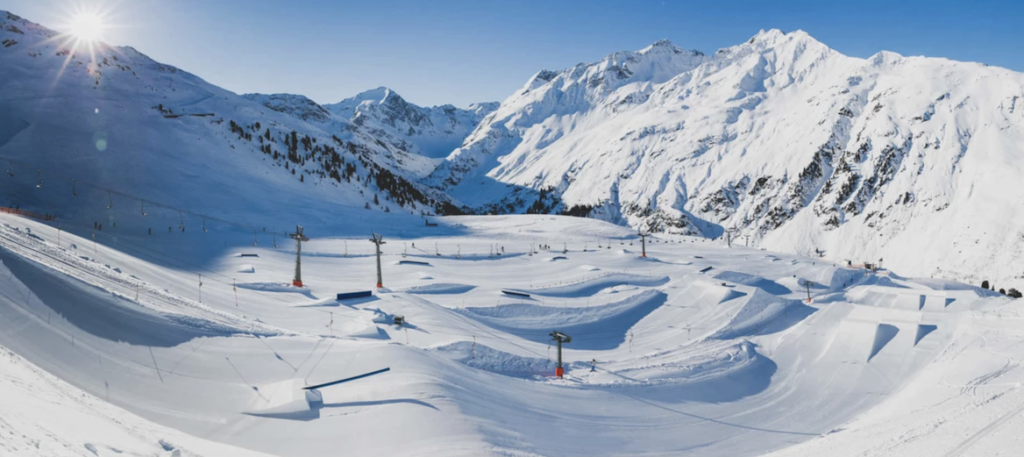
Stanton Park sits at the mountain station of the Rendlbahn, accessible by 2 lifts and served by its own dedicated funpark lift. That last detail matters. A park with its own lift means quick laps without queuing alongside the general piste crowd.
The park runs 3 separate lines graded by ability.
- Beginner Line: Small kickers, low boxes, and wide landings for riders learning their first tricks.
- Medium Line: Larger tabletop jumps, down-flat-down rails, and kinked boxes that reward committed riding.
- Pro Line: Full-size kickers, technical rail combinations, and features that push experienced riders to their limit.
The Stanton Park snowboard setup is shaped and maintained daily when conditions allow, and its position at altitude helps it hold snow well into spring. After a session, the Rendl Beach Bar sits right next to the park, making it easy to watch other riders while warming up.
Beyond Stanton Park, a Funslope at Galzig stretches roughly 400 metres and mixes playful features like tunnels, bridges, and banked turns, ideal for riders who want something between groomed runs and full park laps.
The Freeride Zones: Valluga, Rendl, and Stuben
Arlberg freeride snowboarding centres on 3 main sectors, each with a different character.
Valluga
The Valluga, at 2,811m, is the highest lift-accessed point in the Arlberg. From the summit and only with a guide, experienced riders can access steep north-facing couloirs and wide powder fields that hold snow long after a storm. This terrain is serious and requires avalanche safety knowledge, but the vertical drop and snow quality make it one of the most sought-after freeride descents in Austria.
Rendl
Rendl is where most visiting riders spend their powder days, with the highest point of 2,816m. The area sits directly above St. Anton and is recognised across the international freeride scene for its natural features: spines, wind lips, natural kickers, and varied terrain that drops into the valley. Fresh snow transforms Rendl into a natural playground, and it tends to be less tracked than the main Galzig and Gampen sectors because many visitors gravitate toward the larger connected slopes on the opposite side.
The terrain funnels naturally into gullies and open faces that suit snowboarding particularly well, rewarding riders who read the mountain and pick creative lines. For a thorough breakdown of riding techniques and route options, our guide to off-piste skiing in St. Anton covers safety essentials that apply equally to snowboarders.
Stuben
Quieter and less crowded than St. Anton, and also the home to the renowned snowboard competition Longboard Classic, Stuben offers tree-lined powder runs that suit riders who prefer a more relaxed freeride experience at its highest altitude of 2,367m. The Albona sector above Stuben catches heavy snowfall, and its lower profile means fewer people competing for fresh lines after a storm.
On heavy snow days when visibility drops, Stuben’s tree runs provide shelter and reference points that open alpine bowls cannot. Many experienced local riders head here first when a big storm rolls through.
The strength of the Arlberg’s freeride layout is that you can ride all three sectors on a single lift pass without retracing your steps. A typical powder day might start with early laps on Rendl before the crowds arrive, move across to Valluga once the higher slopes stabilise, and finish in Stuben’s trees as the afternoon light fades. That variety within one resort is what separates the Arlberg from most freeride destinations in the Alps.
Off-Piste Snowboarding with a Guide
Riding off-piste in the Arlberg without local knowledge means missing the best terrain and potentially putting yourself at risk. The region’s 200-plus kilometres of documented freeride routes include everything from gentle open bowls to committing couloirs, and conditions shift quickly with weather and wind direction. What looked like perfect powder at midday can turn into windblown crust by afternoon, and the safest line changes with each new snowfall.
A qualified snowboard guide selects terrain based on the day’s avalanche bulletin, your riding level, and where untracked snow remains. For riders stepping off groomed runs for the first time, guides start with lift-accessed slopes and gradually build confidence on steeper pitches. For experienced freeriders, a guide unlocks lines that most visitors never find.
Off-piste snowboarding in St. Anton is at its best with professional guiding that includes avalanche safety instruction, covering transceiver use, probe technique, and group management.
Equipment for avalanche rescue (transceiver, probe, and shovel) is essential and can typically be rented from local sport shops or directly through your guide. Sessions usually begin with a safety briefing and a practice rescue scenario before heading into the mountains. Guides then tailor the day’s route to group ability and current snow conditions, adjusting on the move as the terrain dictates. Most guided days run from morning until mid-afternoon, covering multiple descents across different aspects of the mountain.
Splitboard Touring: Earning Your Turns in the Arlberg Backcountry
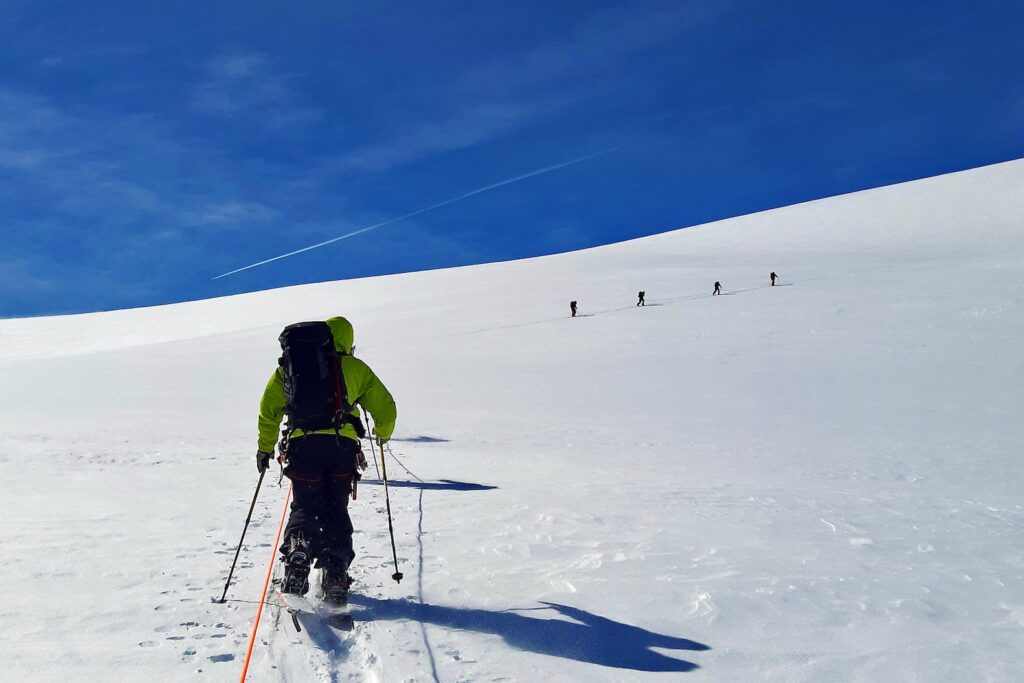
For riders who want to go beyond lift-accessed terrain entirely, splitboard touring opens up a different side of the Arlberg. A splitboard separates into two ski-like halves for climbing, then reassembles for the descent, giving snowboarders access to the same backcountry objectives that ski tourers enjoy. Until recently, ski touring was an activity that excluded snowboarders almost entirely. Splitboards have changed that, and the Arlberg’s backcountry is an ideal place to experience it.
The mountains surrounding St. Anton, Stuben, and St. Christoph offer a range of touring routes, from half-day objectives to full-day missions into remote valleys. Ascents reward you with untracked powder, total silence, and panoramic views that feel completely removed from the resort below. Unlike resort riding, touring lets you choose your own descent based on aspect, snow conditions, and how far you are willing to climb. A south-facing slope that has baked in the afternoon sun will ride very differently to a shaded north face still holding cold powder from the last storm.
Touring requires solid fitness, and the transition from skinning uphill to reassembling your board at the summit takes practice. But the payoff is access to terrain that no lift reaches and descents you share with nobody.
Alpenature organises guided splitboard touring days tailored to your fitness and experience level. A guide handles route planning, reads the snowpack, and selects descents based on current conditions. If you have never toured before, this is the safest and most efficient way to start.
Snow Conditions by Month: When Riders Get the Best Powder
The Arlberg ski season typically runs from early December through to mid-April, but snow quality varies across those months. Here is a general breakdown for riders.
| Month | Conditions | Best For |
| December | Early season, base building, park features taking shape | Park riders, early groomers |
| January | Cold temperatures, dry powder, reliable snowfall | Freeride, off-piste, powder hunting |
| February | Peak season, deepest snowpack, busiest lifts | All-round riding, backcountry touring |
| March | Longer days, spring corn snow, park in prime shape | Park sessions, sunny freeride laps |
| April | Soft snow, warm afternoons, end-of-season closures | Spring touring, high-altitude descents |
January and February typically deliver the driest, lightest powder, and cold temperatures help the snow stay light on north-facing slopes for days after a storm. March offers longer daylight hours and warmer temperatures that transform the snowpack into smooth corn snow by late morning, ideal for carving wide turns on sun-exposed faces.
Riders visiting in late March or April should plan their days around the freeze-thaw cycle: skin up or take the first lifts while the surface is firm, then ride once the sun softens the top layer.
Gear Rental and Board Setup in St. Anton
St. Anton has several well-stocked sport shops in the village centre, and most carry a solid selection of freeride and all-mountain snowboards alongside standard rental fleets. If you ride a splitboard, confirm availability with the shop in advance, as stock can be limited during peak weeks.
For riders visiting specifically to ride powder, a freeride board with a directional shape and setback stance will perform noticeably better than a twin-tip park board in deep snow. Many shops offer demo programmes that let you swap boards mid-trip if conditions change.
Avalanche safety equipment (transceiver, probe and shovel) is available for rent at most sport shops in the village. If you are heading off-piste with a guide, check whether your guide provides this gear or whether you need to arrange it separately.
The Après Scene for Riders
St. Anton’s après-ski scene needs little introduction—the village has long been one of the liveliest in the Alps, and riders will find the atmosphere welcoming. MooserWirt and Krazy Kanguruh sit slope-side and fill up the moment lifts close, while bars in the village centre keep things going well into the night.
If you want something quieter, Stuben and Lech offer a more relaxed pace, with traditional Tyrolean restaurants and wine bars replacing the thumping bass. For riders who appreciate the full picture of what makes the Arlberg special beyond the slopes, our overview of the best ski resorts in Austria covers dining, culture, and village character in detail.
Book Your Arlberg Snowboard Trip
The Arlberg delivers on every front that matters to snowboarders: a maintained park, world-class freeride terrain, genuine backcountry access, and a village that celebrates a good day on the mountain. It is not a ski resort that happens to allow snowboards. It is a complete snowboarding destination.
Alpenature specialises in planning Arlberg trips, from lift pass logistics and accommodation to guided freeride days and splitboard touring. If you are ready to experience snowboarding in Arlberg for yourself, get in touch and start building your trip.


